Managing Financial Stress with Acceptance and Commitment Therapy (ACT)
Do you find yourself worrying a lot about money and finances? You are not alone. With a downturn in the...
Read More →
Mental health is a complex topic, with numerous factors shaping how we think, feel, and behave. One important psychological concept that plays a major role in how we navigate life’s challenges is where we gain our sense of control.
Our sense of control in our daily lives plays a crucial role in our mental health and functioning because it shapes how we respond to challenges, stressors, and setbacks. When we believe that we lack control to improve the circumstances or stressors we are facing, it can lead to feelings of helplessness, anxiety, and depression. On the other hand, when we feel we have control of our circumstances and that we have the power to influence the challenges we face, we experience higher levels of confidence, motivation, and emotional resilience.
Reshaping where we derive our sources of control is vital to improving our mental well-being and overall functioning. This concept is known as locus of control.
This article will discuss what ‘locus of control’ means and how it influences our mental health and wellbeing, as well as offering practical suggestions for how to reshape your locus of control to improve mental health.
What is Locus of Control?
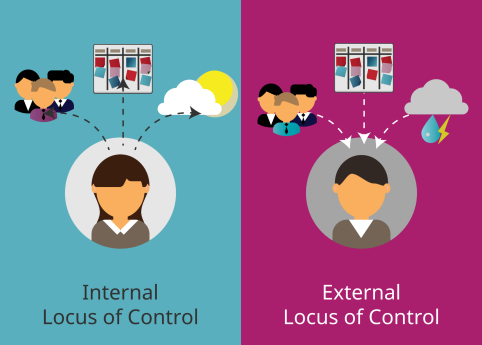
Locus of control is a psychological term that refers to how people perceive the causes of events in their lives. It’s about whether you believe you have control over the outcomes of your actions or whether external forces (like luck, fate, or other people) are in charge. Locus of Control is divided into two types.
Internal Locus of Control
People with an internal locus of control believe that they are responsible for their own success or failure.
They attribute outcomes in their lives to their actions, efforts, and decisions. For instance, if someone with an internal locus of control does well at work, they might credit their hard work, skills, and preparation. On the other hand, if things don’t go well, they may reflect on their own actions to understand what they can improve.
External Locus of Control
People with an external locus of control believe that their outcomes are largely influenced by outside forces. They may attribute success or failure to luck, fate, the actions of others, or circumstances beyond their control. For example, if someone with an external locus of control does well at work, they might attribute it to “being in the right place at the right time” or the support of a helpful colleague, rather than their own effort
How Locus of Control Affects Mental Health.
The way we perceive control in our lives can have a profound impact on our mental health. Here’s how the
two types of locus of control can affect us:
Internal Locus of Control
Having an internal locus of control can foster a sense of empowerment. People who believe they are in control of their own fate are more likely to search for proactive steps that are within control to focus on, set goals to achieve those steps, actively work toward them, and persist in the face of challenges or obstacles. This can lead to greater self-esteem and a more robust approach to problem-solving.
Take the example of Melanie, who has an internal locus of control. When she faces a setback at work— perhaps missing out on a promotion she was working towards — she doesn’t blame others or external factors. Instead, she takes responsibility for her part in the situation. She reflects on what she could have done better, like improving communication skills or seeking more feedback from her manager. She then sets specific goals to work on those areas, such as enrolling in a professional development course. Despite facing challenges along the way, like a busy schedule and balancing work with family, she keeps pushing forward. As a result, not only does her career improve, but her confidence and ability to tackle problems in all areas of his life also grow, boosting his self-esteem and resilience.
However, there can be some potential draw backs to a very strong internal locus of control which are useful to be aware of. Regardless of a strong internal locus of control, there are times when external factors are strongly at play and shape our lives. When we see ourselves as the agent of change and control we can blame ourselves excessively when things go wrong. This can lead to stress, anxiety, and even depression if you feel like you are always responsible for everything, even when external factors are clearly at play. In the above example, it is clear that many factors where outside of control and influenced the outcome which could not be avoided.
For example James who also has a strong internal locus of control. He also has been working hard to advance in his career, believing his efforts and skills will determine his success. However, despite his dedication, a sudden economic downturn with company-wide layoffs resulted in losing his job. In this case, the external factors significantly influenced his goal to advance his career. Nothing he did could have influenced that outcome. Blaming himself for losing his job could negatively affect his mental state and affect his ability to moved forward to finding another job.
As such, it is important to focus on what is in your control to influence and work towards those factors, and accept the factors that are outside of your control. There will be many though this does not have to stop us taking action to our values and working on solutions that enrich our mental health the best we can.
External Locus of Control
People with an external locus of control may experience less personal stress in challenging situations because they don’t blame themselves when things go wrong. They might feel more adaptable, as they believe that some things are simply out of their control and thus can go with the flow.
However, a strong external locus of control can lead to feelings of helplessness and a lack of motivation. If you believe that your efforts don’t make a difference, you may not try as hard to improve your situation. This can contribute to depression, anxiety, and a feeling of being stuck in life.
Take the case of Alex, who has an external locus of control. When faced with a difficult situation, like struggling to maintain a healthy lifestyle, Alex encounters challenges such as unexpected overtime to meet a critical deadline or a busy schedule that disrupts their routine. Instead of blaming themself for not sticking to their goals, Alex believes that these disruptions are beyond their control — like bad timing or the influence of friends. This mindset allows them to feel less stressed about their lack of progress, as they doesn’t internalise the setbacks and adapts by telling themself it’s just how life goes.
However, over time, Alex’s belief that external factors are the main cause of their struggles leads them to feel less motivated to try harder. Since they think their efforts won’t make a significant difference, they stop trying to prioritise their health and doesn’t make any active changes to their lifestyle. This results in a sense of helplessness, and Alex starts to feel stuck, experiencing anxiety about their lack of progress and ultimately struggling with low self-esteem.
Using Locus of Control to Improve Your Mental Health
While neither internal nor external locus of control is inherently good or bad, finding a balance between the two can lead to better mental health. Here are some tips on how to harness your locus of control to improve your well-being:
Instead of ruminating on uncontrollable external factors (like what others think or global events), focus on small actions that align with your values. Take responsibility for your actions and decisions and acknowledge the ways in which you shape your life.
For instance, if you’re feeling anxious about the world, you can choose to engage in activities that bring you peace, like meditation or spending time in nature, even though you can’t control global events. This approach helps you stay connected to your values and enhances your sense of agency.
However, avoid taking on too much blame. Life is complex, and sometimes circumstances beyond your control play a huge role in outcomes. Balance self-reflection with self-compassion. Remember, mistakes and setbacks are a natural part of growth.
When facing personal challenges or setbacks, practice acknowledging that not everything is within your control.
For example, if you fail at a personal goal, rather than blaming yourself entirely, recognise that some external factors, like timing or resources, played a role. By accepting that not everything is your fault, you reduce self-criticism and free yourself to move forward with greater self-compassion.
Instead of fighting against difficult emotions, use mindfulness to accept them as they arise.
For instance, if you’re feeling overwhelmed by stress, practice observing your emotions without judgment. Accept that some things are out of your control (like the actions of others) and focus on how you can respond in a healthy, value-driven way.
Even when external circumstances seem overwhelming or unpredictable, use your internal locus of control to guide you toward actions that reflect your core values.
For example, if you’re facing a challenging family situation, rather than trying to control others, focus on what kind of family member you want to be, such as offering support or setting healthy boundaries, and take action in line with those values.
Instead of seeing obstacles as signs of failure or as things you can’t change, view them as opportunities for growth.
For instance, if you’re facing a personal setback, use your internal locus of control to reframe it as a chance to learn something new, like improving your coping skills or developing greater patience. This shift in perspective can help reduce feelings of helplessness.
By recognising that you cannot control every aspect of life, you can increase your psychological flexibility — the ability to adapt to changing situations.
For example, if your plans are disrupted due to unforeseen circumstances, rather than feeling helpless or frustrated, practice acknowledging what’s outside your control and choose to act in a way that’s still in line with your values. This helps reduce stress and fosters a sense of resilience.
These examples blend the Acceptance part of ACT, which involves accepting what you can’t control, and the Commitment aspect, which involves taking meaningful actions aligned with your values, even in the face of challenges.
Conclusion
The concept of locus of control has a significant impact on how we approach life’s challenges, and ultimately, on our mental health. By understanding where your sense of control lies — internally or externally — you can gain insight into how you approach problems, setbacks, and successes.
The key to improving mental health is finding a balance between taking responsibility for your actions and recognising when external factors are at play. By practicing mindfulness, setting achievable goals, and building a strong support system, you can create a healthier mindset and lead a more fulfilling life.