Managing Financial Stress with Acceptance and Commitment Therapy (ACT)
Do you find yourself worrying a lot about money and finances? You are not alone. With a downturn in the...
Read More →
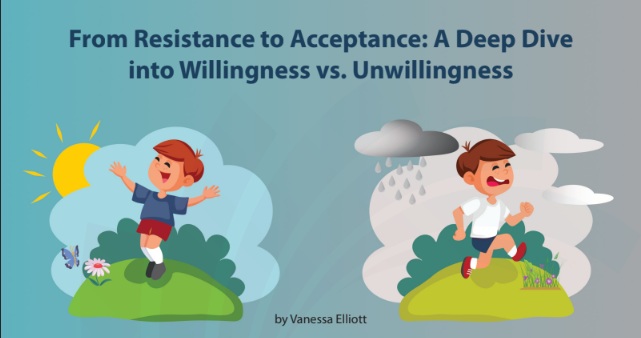
Have you ever found yourself saying “no” to something you know could be good for you, or avoiding a task because it feels too overwhelming? Or, on the flip side, maybe you’ve felt the excitement to jump into something new, full of energy and curiosity. These responses are all part of a deeper psychological process—our willingness versus unwillingness to take action.
In this blog, we’ll explore how these two forces affect our daily lives, why we sometimes resist certain things, and how we can shift from resistance to acceptance in a way that helps us grow and feel more in control.
What Does Willingness Mean and Why is it Important?
Psychological willingness is the mental attitude where we are ready to take on something new or face a challenge, even if it’s a little uncomfortable or uncertain. When we’re willing, we’re open to trying new things, stepping out of our comfort zones, and embracing changes that can help us grow. It’s the mindset that helps us push past fear, tackle difficult tasks, and stay motivated even when things get tough.
Willingness is not about saying “yes” to everything without thought, but rather about having the mental flexibility to face challenges, step outside our comfort zones, and embrace discomfort as part of personal growth. It is the ability to trust ourselves enough to take the first step into the unknown, even when we don’t have all the answers. People who cultivate willingness tend to have a more optimistic mindset, believing in their ability to navigate difficulties and bounce back from setbacks. This mindset fosters resilience, emotional growth, and adaptability, which are crucial for mental health. By embracing willingness, we build the mental strength to cope with stress, uncertainty, and adversity, making healthier decisions and improving our overall sense of well-being. This process not only enhances our confidence and emotional strength but also reduces feelings of stagnation or helplessness.
What Does Unwillingness Mean and How Does it Affect Us?
Psychological unwillingness is when we resist or avoid our discomfort. Our discomfort might be painful thoughts, uncomfortable emotions, unwanted physical sensations, strong urges. It’s that inner feeling that says, “I don’t want to feel this way” , “This feels too hard” or “I need these difficult feelings to go away to be able to live life”. Unwillingness for our discomfort can arise for many reasons — maybe we’re scared, we’ve failed before, or we simply feel such strong emotions that it feels like we can’t take action till it stops. Examples of unwillingness include procrastinating on a work task because of fear of failure, avoiding difficult conversations to escape emotional discomfort, or numbing feelings through distractions like excessive screen time or overeating. It’s completely normal to feel unwilling at times, but when we let that feeling control us, it can prevent us from growing and achieving what is important to us.
Unwillingness can be a natural and healthy response to strong emotions or discomfort. Without avoidance, we would engage in many risky scenarios or actions, such as picking up a highly venomous snake and patting it like you would a dog! Clearly not the most helpful behaviour to engage in. However, when we remain stuck in this state for too long, it can make it hard for us to grow and achieve our goals. While it may initially protect us from discomfort, ongoing unwillingness can lead to avoidance, procrastination, and missed opportunities, preventing us from confronting challenges or addressing underlying issues. Over time, this resistance can foster feelings of stagnation, frustration, and self-doubt, trapping us in a cycle of inaction that hinders progress and negatively impacts our mental well-being and sense of vitality in life.
The Push and Pull: Willingness vs. Unwillingness
Throughout life, we all will experience both willingness and unwillingness — myself included. Like most of you, I am more than open to feeling joy and love, but I don’t like feeling stressed or anxious any more than the next person. However, discomfort — whether we want it or not — is a natural part of life and something we can’t avoid. Discomfort and comfort are part of all our journey’s because they help us to take action to, and remind us about, what is important. In discomfort we grow the most. It helps to push us beyond our limits, encouraging us to adapt, learn new skills, and become stronger in the face of challenges. Without it, we would remain stuck, missing opportunities to grow. On the other hand, comfort provides a vital balance to our discomfort, providing essential moments of recharge for our mental health. Together, they shape who we are, allowing us to learn from both challenges and successes, and ultimately lead us to a more fulfilling life.
To visualise the relationship between willingness and unwillingness, imagine a dial that ranges from 0 to 10, where 0 is complete unwillingness and 10 is total willingness. One moment, the dial might be cranked up to 10, and we feel ready to open up to our discomfort and take on a challenge; the next, it might drop down to 2, and we are struggling with our emotions and trying to block or avoid it.
This constant shift, this push and pull, is a normal part of being human but we do have control over what volume level our willingness it. Willingness is developable skill. It’s about finding a balance between the two, adjusting the dial as needed when you notice that it is low. With time and practice, we can notice when we are actively unwilling for our discomfort, and work on turning up the volume on willingness. You don’t have to say “yes” to everything in service of willingness, but taking small steps toward what you’ve been avoiding can help you build resilience and open doors to new opportunities that enrich your life. It’s about learning how to face discomfort, trust yourself, and grow, one step at a time, adjusting the dial towards a more willing state.
Dialling up from Unwillingness to Willingness
If you find your willingness dial set at 0 or another low number, feeling stuck in resistance or struggling with your inner world and the challenges of your experiences, you’re most certainly not alone. You will be hard pressed to find another human who never gets caught in this struggle from time to time, or even often. However, we don’t have to stay stuck in this state. By practicing ways to dial up your willingness, you can gradually shift from resistance to action, breaking free from the cycle and approaching challenges with more ease, confidence, and clarity. Gently turning up the dial of your willingness will help you navigate your emotions and mindset in a way that brings more flow and progress to your life.
The first step is to simply acknowledge that you’re feeling resistant or unwilling for your discomfort, without criticism or harsh self-judgment. It’s important to approach these feelings with self-compassion, normalising it as a natural part of being human, as we cannot avoid discomfort throughout life. You might be able to avoid it sometimes, but it will return. Recognise unwillingness for what it is — a normal emotional response to uncertainty or discomfort. So next time you feel resistance to starting a work project because it feels overwhelming, rather than chastising yourself for procrastinating, recognise that this hesitation is a common reaction to stress or uncertainty.
Try to separate the state of resistance from your self-worth. Just because you’re feeling unwilling doesn’t mean you’re failing or weak. Acknowledge it as part of being human and we don’t feel willing at all times. Allow yourself to feel reluctant without jumping into self-criticism. Just like when you feel anxious before a big presentation, it’s okay to have those feelings, and they don’t mean you’re weak or incapable. Rather, those feelings tell you you care about how you well perform and can be used to help you prefer for the presentation rather than wasting time in self-criticism.
Once you’ve acknowledged your resistance, dig a little deeper to understand what’s behind it. Ask yourself: Why am I feeling unwilling? Is it fear of failure or the unknown or perhaps the uncertainty of what might happen if you put yourself out their and try something new? For example, if you’re resisting applying for a new job, maybe you’re afraid of rejection or fear that you won’t measure up to the expectations. Or, you might have had a negative experience in the past — perhaps a job interview that didn’t go well or a failed project — which is causing you to worry that history might repeat itself.
Take some time to sit quietly and listen to what your feelings are telling you. Think about what’s coming up for you, even if it feels uncomfortable or difficult to face. Reflecting on your emotions can help you identify whether the resistance is coming from a deeper fear or past experience, or if it’s simply a temporary feeling that can be worked through. Understanding the root cause of your resistance helps you figure out whether it’s something you need to work through (like a fear of failure) or whether it’s a valid reason (like recognising that a task isn’t aligned with your values or is too overwhelming at the moment). This process allows you to make more informed choices about how to move forward — whether that’s pushing through the resistance or deciding to let go of a particular task or goal.
Sometimes, resistance comes from feeling overwhelmed by the enormity of a task. When a goal or project feels too big, it’s easy to shut down or avoid it altogether. One way to shift from unwillingness to willingness is by breaking the task down into smaller, more manageable pieces.
For example, if you’re unwilling to start a big work project, instead of focusing on the whole thing, break it down into smaller steps. Start by planning your first action, whether it’s researching, drafting an outline, or making a phone call. This can make the task feel less daunting and create a sense of momentum.
Unwillingness is often driven by negative thoughts or limiting beliefs, like “I’m not good enough” or “I can’t do this.” These thoughts create barriers that prevent us from acting. In these moments, it’s important to challenge these thoughts by asking yourself: “Is this thought really true?” ..,”Does this thought help me to achieve what I want to achieve or be who I want to be”…and “What evidence do I have that contradicts this belief?”
Distance from your thoughts and look at them rather than through them. They are telling you are story that may not be truth and fact…just your brain’s perspective on yourself in that moment. Reframe your thinking by focusing on positive and empowering beliefs, such as: “I can take this one step at a time,” or “I’ve overcome challenges before, and I can do it again.” By changing the narrative in your mind, you can shift from resistance to acceptance.
Willingness is built through consistent, value driven action. Start by taking small, consistent steps toward what you’ve been resisting. And to help you with this, remind yourself why you are doing this. Think about the values that you are trying to nurture, and what is important to you in taking this action or opening up to these difficult feelings. If you can link willingness to what is important to you you, it helps to breed more willingness. Even a tiny action, like sending an email, making a phone call, or setting a timer to work for 10 minutes, can break the cycle of resistance.
The key is to avoid the pressure of needing to “do it all” at once. Just focus on the next step and trust that each small action will lead you closer to where you want to be.
Finally, be kind to yourself throughout this process. Moving from resistance to willingness is a journey, and it’s okay to encounter setbacks or moments of doubt. Don’t forget to acknowledge your progress, no matter how small. Each time you push past your resistance, you’re building resilience and moving toward greater acceptance.
Celebrate your successes along the way. Whether it’s recognising that you’ve taken the first step or giving yourself a pat on the back for overcoming a fear, celebrating your progress reinforces the positive changes you’re making.
The key is finding the balance that works for you. By exploring the reasons behind your resistance and choosing to move forward with willingness, you can create a more fulfilling and empowered life. By gently exploring the reasons behind your reluctance and approaching challenges with an open heart, you can gradually move toward a life that feels more aligned, empowered, and fulfilling.
Dialling up your willingness is a useful practice that can help us break free from inner resistance to help us create lasting change. By acknowledging our reluctance with compassion, understanding the root causes of our resistance, and taking small, consistent actions, we can gradually shift from a state of unwillingness to one of empowered action. Remember, this process isn’t about perfection — it’s about noticing whether you are open and willing to your experiences (inside and out) or blocking them, so that you can build greater resilience and self-compassion. As you continue to practice dialling up your willingness, you’ll navigate challenges with greater ease, clarity, and confidence, ultimately creating a more fulfilling and aligned life.